

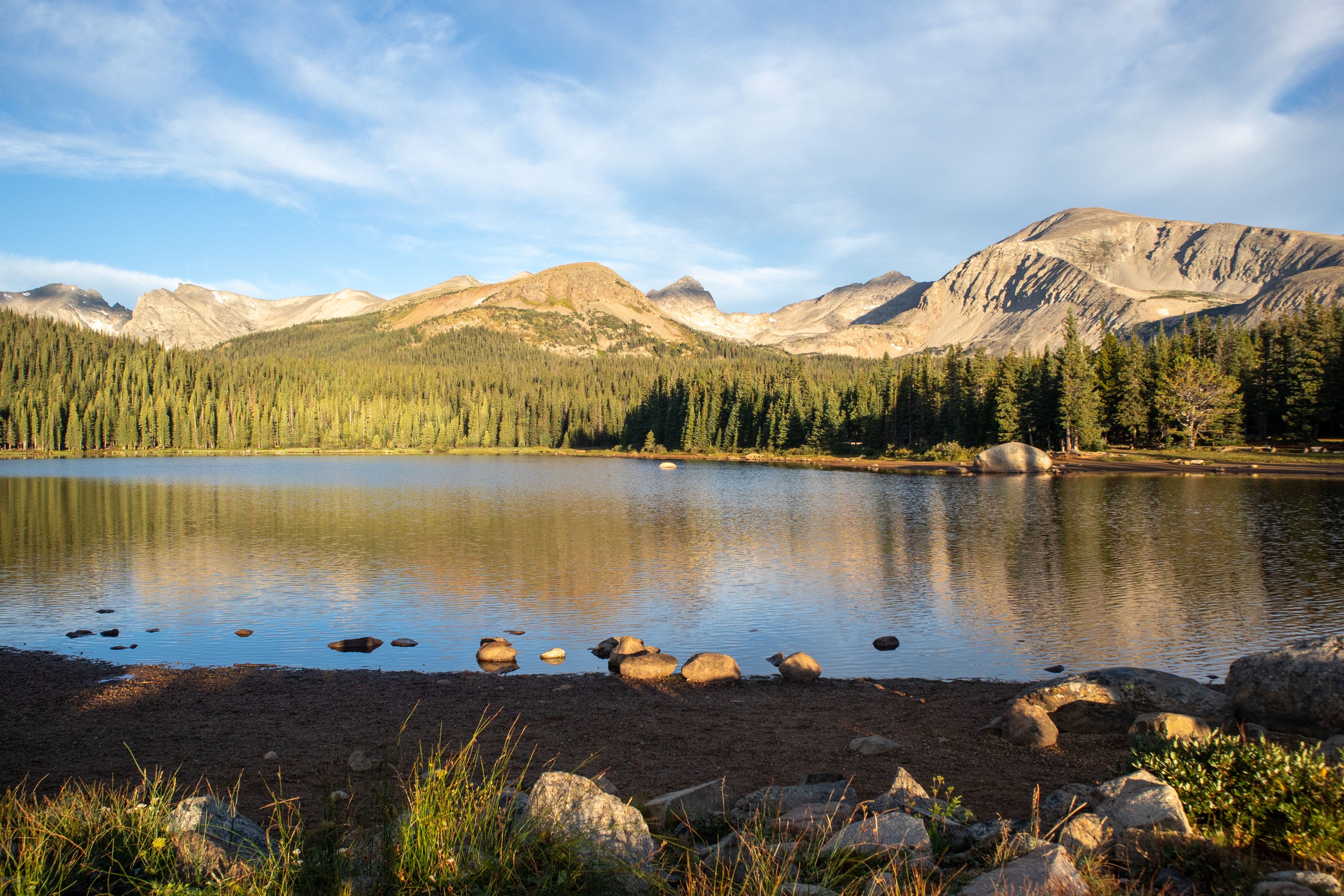
A late summer stillness settles in at Brainard Lake. The cool evening air pours into the valley. Everyone moves slowly, without urgency. There is a kindness that permeates the air. Smiles on faces, soft conversations, laughter. For the past few days, a parched static has pervaded the air—and with it a desperation for rain. Smoke from fires on the Western Slope seeped over the Divide on the highest wind currents and stained the clouds like spilt tea. But today the winds shifted, the skies cleared.
Families relax on the shore. They sit in camp chairs, share dinners from coolers, eat sandwiches and salads piled high on paper plates. Children in plump life jackets steer paddle boards in wide circles in the shallow water. Small flocks of juncos tumble from one bush to the next, chasing each other and chattering softly. Chipmunks inspect the perimeter for dropped goods: potato chips, bits of bread, clusters of sweet granola.
Brainard Lake was once home to the Ute and Arapaho Native American tribes. Later settled by Europeans in the late 1800s. With them came logging, mining, ranching. The area was part of the Louisiana Purchase in 1803. Roosevelt’s New Deal of the 1930s brought the Civilian Conservation Corps to the area. They built recreational facilities, trails, picnic areas, campgrounds.