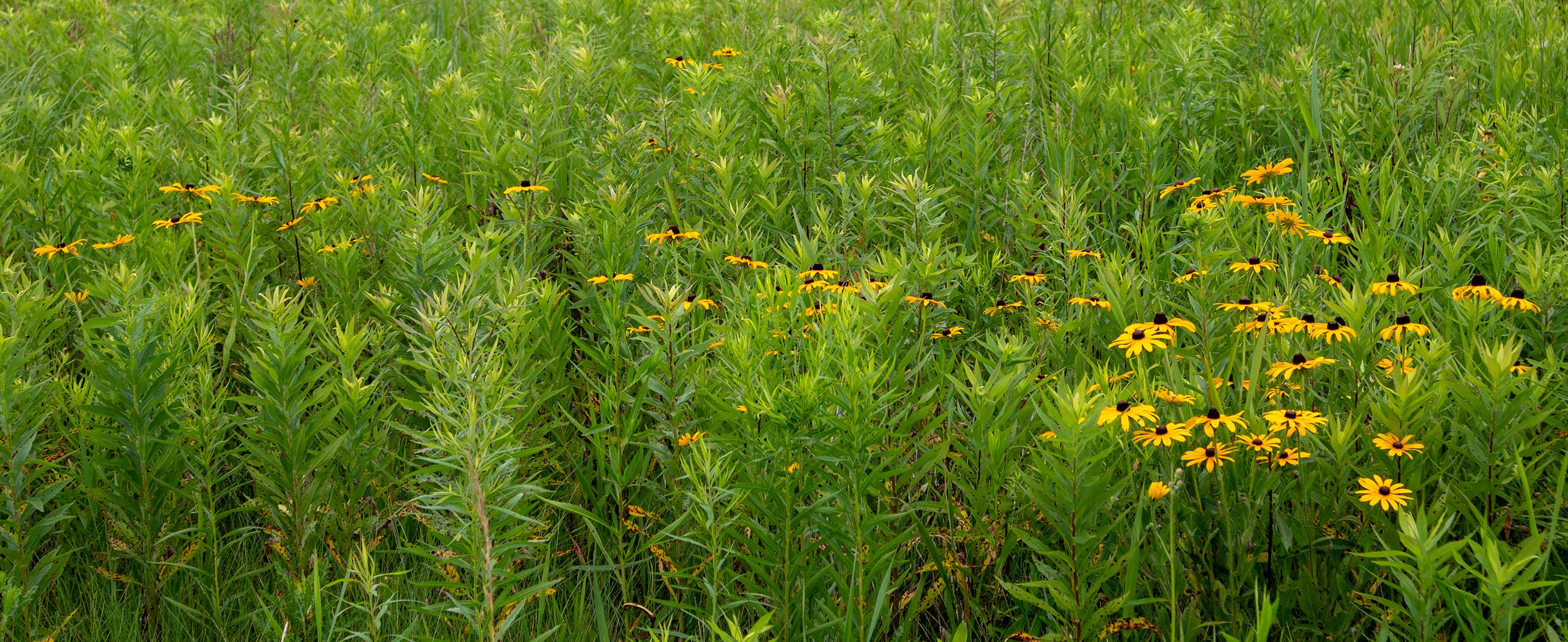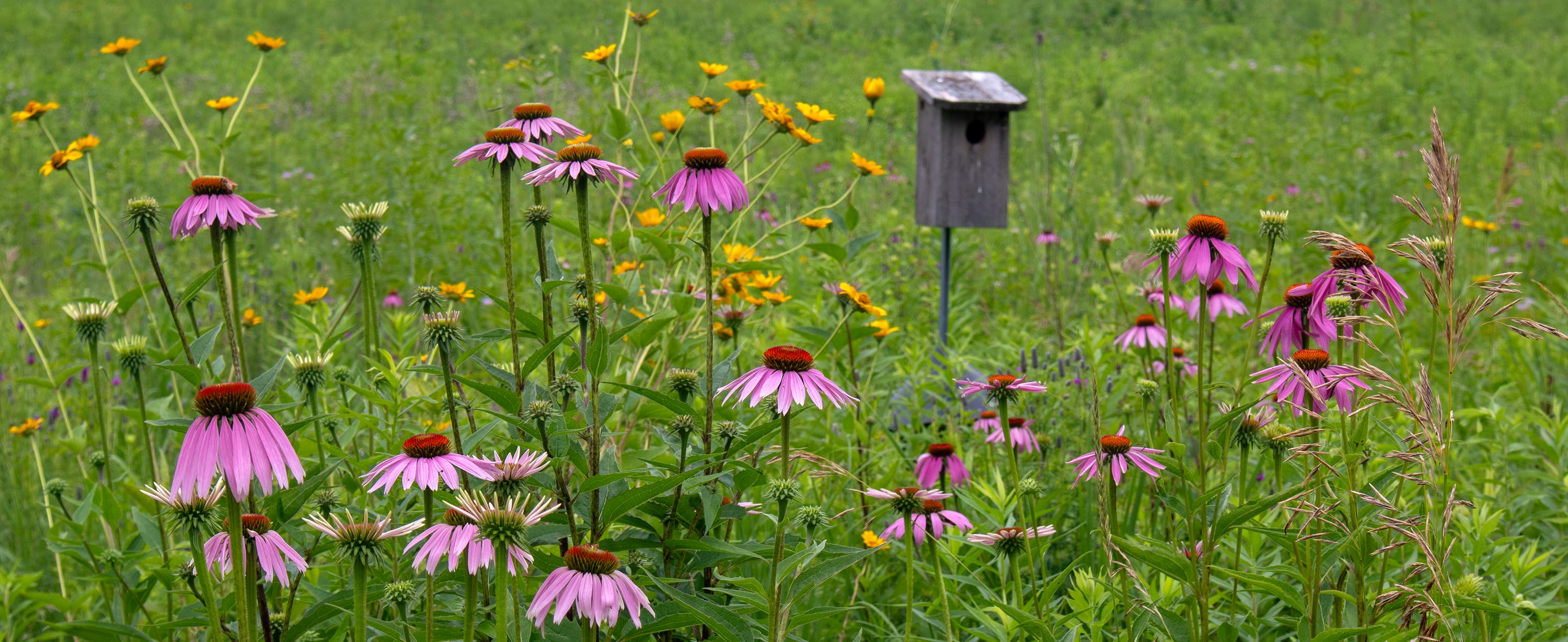
The midwestern summer air is muggy and sweltry. There’s a sense that everything on the prairie stings, bites, cuts, begets rash. Hikers flinch and swat at real and imagined attackers alike: mosquitos, spiders, biting flies, nettles, poison ivy. But there is beauty too, and you can see it in the tall, proud Purple Coneflowers and the joyful Annual Sunflowers. The prairie plant list is extensive and animated with peculiar names: Rattlesnake Master, Joe Pie Weed, Junegrass, Milkweed, White Snakeroot.
Bull Creek overflows its banks in early summer, then runs dry by late July. During the wettest times, it leaks wide across flat ground, creating more swamp than waterway. The prairie transforms into rich wetlands that support a grand diversity of birds, both resident and migratory species.
I jot down my own inventory of birds spotted during my prairie walks. The easy ones are the songbirds, Blue-gray Gnatcatchers, Gray Catbirds, Baltimore Orioles. But the prize sighting of the season is a Sora. This secretive rail, though rarely seen, is unmistakable. A stout yellow bill, a sooty black face, yellow-green legs, long toes, and an cringeworthy clumsiness on land.